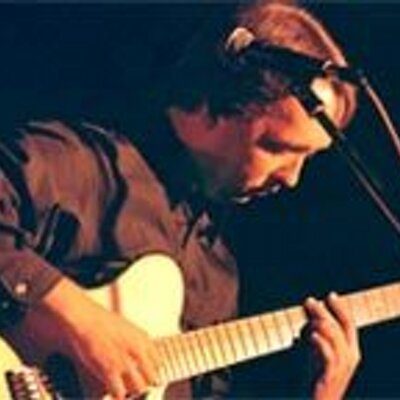
I primarily play electric guitar, a Reverend Rocco USA that’s been with me for over 15 years. For acoustic parts, I like to use a Boss AC3 acoustic simulator or the one on my Roland amp. It gets me by, especially for those pub gigs where I cant bring a lot of stuff with me.
But for playing intricate, authentic acoustic guitar music, only a real acoustic guitar will do. There’s something about the envelope of the notes that sorry to say, a simulator hasn’t gotten down yet.
I think when choosing an acoustic , one should consider some key points; size, material, and of course price.
Size wise, I would not go any smaller than a 000, a 00 Martin size or a dreadnaught. I know there are lots of “parlor guitars” out there and I’m tempted by their easy of carry, but you just cant hold them in a comfortable position (at least I can’t). the only position I’ve found that works is not comfortable for doing vocals. With a dreadnought, a 000, or a 00, your arm can drape comfortably over the body, which translates to longer practice time and improved performance.
As far as materials go, I would choose a lesser name solid wood (sides, back, and top) over a well known laminate or composite any day. These laminate guitars sound ok and aren’t affected by weather,, but if you bust a hole in a laminate, you are probably looking at buying a new guitar.
Finally price. It really comes down to whether you can meet the above two requirements at a price you can afford. I would look at less prestigious brands to get what I need. Many of these brands will offer a solid mahogany for a reasonable price which should last you for a lifetime. And a solid wood guitar will only play and sound better with age.
And that’s that/
Category: music advice
Becoming A Useful Musician
While everyone wants to be excellent at one thing, sometimes we need to branch out and be just pretty good at a lot of things if we want to catch paying gigs.
For instance, being a pretty good transcriber, arranger, band organizer, or being able to play percussion are crucial. Knowing how to conduct a choir, teach your instrument, record an ensemble with minimal equipment are all skills that will come in handy.
I often tell my guitar friends that I prefer an all around guitarist who can use the pentatonic scale well in every genre. This kind of player can handle any chart and make it sound correct.
As far as music reading goes, I think learning to read a jazz chart ( melody with chord symbols) is far more useful than being able to read a full piano score, though I think four part hymn reading is a must.
On the percussion front, if you’re not a drummer, being able to do a variety of grooves on simple hand percussion could get you an accompianment gig at a coffee house or pub.
What I’m trying to say is, being versatile will prepare you for opportunities when they come along. Opportunities unprepared for are opportunities missed.
Welcome to the home of Randy Lin Guitar
This is my new domain name randylinguitar.com. I’m so happy to have an easy to find name. Look soon for sheet music and CDs. Always more forthcoming from Randy Lin Guitar.
What constitutes a real opportunity in music?
This question is important, especially for young musicians, because they often jump before looking when they hear the words “performance” or ” paying gig”. Many times these “opportunities” are merely opportunities to be used by someone.
Take for example a recent ” opportunity” to play an outside gig. The pay was good, but not in comparison to the time required to play (3 hours).
This gig was in a square surrounded by restaurants blasting their own music for their outside customers. At the same time, there were volume limits placed on the performer, who, even when the restaurants were quite, was barely audible.
No one was really paying attention to the performer, thanks to the sports TVs in the outdoor dining areas. The performer went thru song after song with barely any interaction or applause between numbers.
These kinds of “opportunities ” are unhealthy for young performers. They damage confidence by making he or she ask “do I suck,” when the real problem is threefold: the venue, the requirements, and yes, the audience, all suck!
So what’s a good opportunity? It’s one where you are advertised and annouced. It’s one where people are there for the show, not background music. And it’s one where you feel good about the amount played to the amount paid ratio.
It takes time and experience to learn how to vet these opportunities. As a person with over 40 years experience, I’ve run into a few nightmare gigs. Hopefully, I can help you avoid those.
Beware Musical Perfection
Perfectionism is bad enough. always pushing yourself to ever specific corrections in technique, tone, and phrasing. But whats worse is perfection itself.
Its been said that perfection is the enemy of everything good. But its also true that perfection is the enemy of creativity. I call it the “Heisenberg Paradox of Music”. In physics, Heisenberg stated that you could either know the position of a particle OR its speed, but never both.
In Music, you can either play perfectly or play creatively but not both. Why? Because what makes a player unique are his/her limitations as well as abilities. Every great musician I can think of has some quirk or limitation that made them what they are. BB King said he couldn’t play and sing at the same time, so you hear him sing a line then play a line. Pat Metheny said he learned to hold his pick wrong, so he developed beautiful left hand hammer on and pull off lines. And so on. Time and again we see that what makes a person unique is their limitations, for which they must use creativity to overcome.
Does this mean I’m anti technique? Not really. But I have to say, the musicians I’ve seen whom seem to have no limits in technique dont score highly in the creativity department. They don’t have to. They can play in all keys equally and have few if any limitations to overcome. But i seldom recognize one of those musicians from the other. They are the finished product of their education. Unfortunately, They lost their individual voice.
So what am I saying? Maybe less time on the technical more on the expressive. Maybe that’s what we need in music.
Having a workable music setup
Everybody’s workflow is different when it comes to music production. And different workflows often require different tools. What’s touted as the “newest and best” isn’t always such for everyone.
To me, there are three parts that need to be addressed:
- song creation timbre – a sound making source such as a synth keyboard or a guitar and effects
- song capture- a way to record creations quickly so they are not lost
- song modification and finishing- a way to edit and polish the song before sending out
Some people find all of the above in a DAW software. I used to be happy in that, but my fav softwares have either gone the way of dinosaurs or have been altered for the 2020s in ways that I find unsatisfactory, including being subscription based rather than bought at one time.
So I’ve searched. Two credit cards worth of searching. But I’m pretty much set on the following:
guitar– overdrive–delay–looper with song save slots and USB, all on a pedalboard
Having this at my feet inables me to work intuitively and add parts quickly. The finished product is USBed to my computer for editing and posting.
What loopers are available for this? The Boss RC5 is a good one, as well as the older RC3 and the Digitech Jamman Solo XT. I beleive in keeping computers for what they do best- final finishing and rendering to a shareable medium.
Keeping it simple in music production is the only way to go. Never look down on your rig as long as it can cover the above three points effectively.
preparing for new album
just got the recoder and am familiarizing myself with it. big plans for this album. watch for it this spring!
randy
 randy lin guitar