This is my new domain name randylinguitar.com. I’m so happy to have an easy to find name. Look soon for sheet music and CDs. Always more forthcoming from Randy Lin Guitar.
This is my new domain name randylinguitar.com. I’m so happy to have an easy to find name. Look soon for sheet music and CDs. Always more forthcoming from Randy Lin Guitar.
There’s a lot of new gear out there. Some of it is worth the price, some of it may be hype. I’m not here to say what anyone should buy, only what I know from experience as to what’s reliable and usually less expensive. What I find as a general rule is that there are some pieces of gear that never change and have been in use for a long time, for good reason:
These pieces will save you money in the long run because you wont keep replacing them. So stop the gear acquisition syndrome and go classic.
And that’s that.
We all want bullet proof gear that does the job and keeps doing the job year after year. And we want it to do what it says on the label.
The Boss DD3 is a workhorse pedal that’s stood the test of time. It’s on a lot of professional pedalboards. It’s in a lot of home rigs. And it will get you the sounds you need in most any gig, from country, to rock, to a lot of other styles. A lot of pedals have modulation, but the DD3, being 12bit, sounds almost that to me. A little whammy bar and it’s pretty much there. There are a lot of things it can do. Here are a few of my favorite settings:
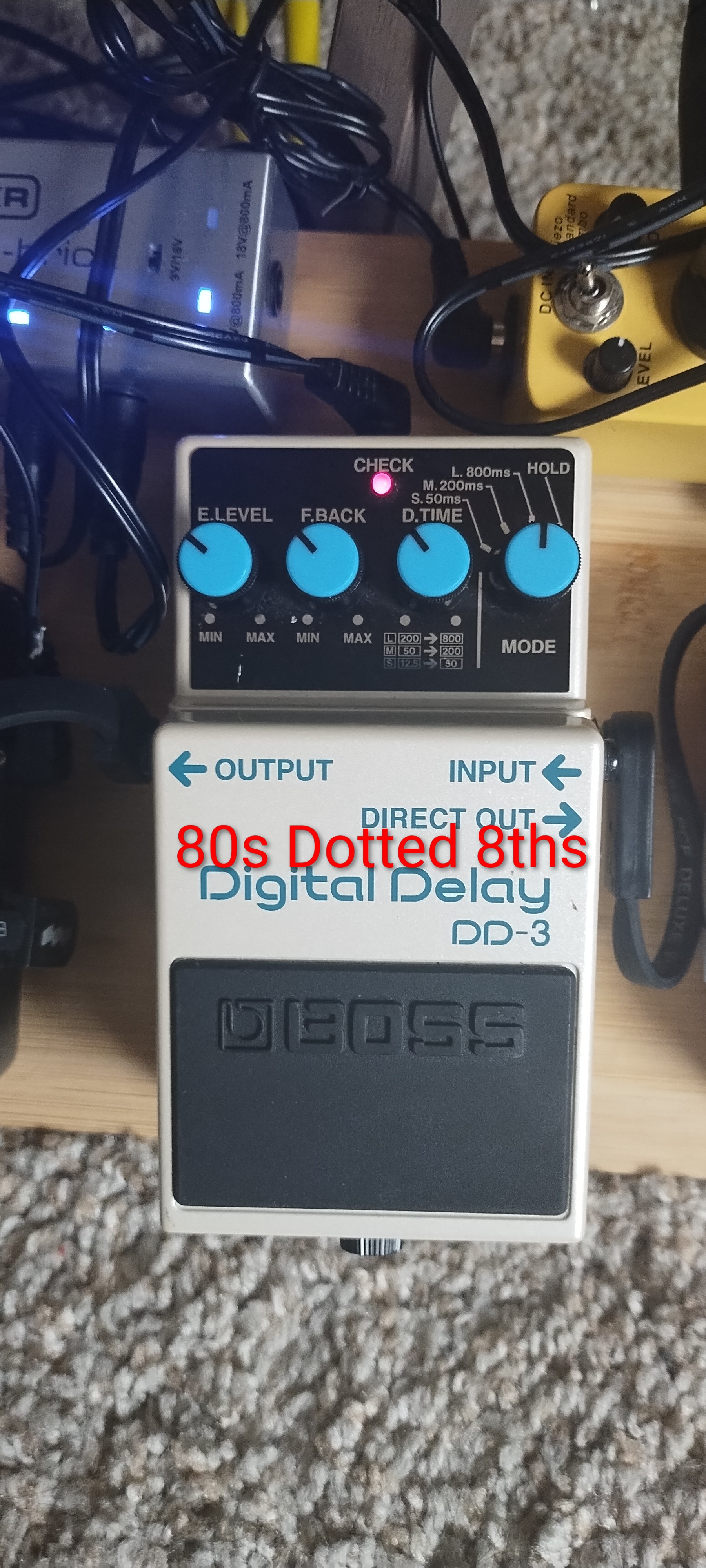
I call this one my U2/Eric Johnson/ Pat Metheny setting. But they all use modulation, you say. You won’t miss it.
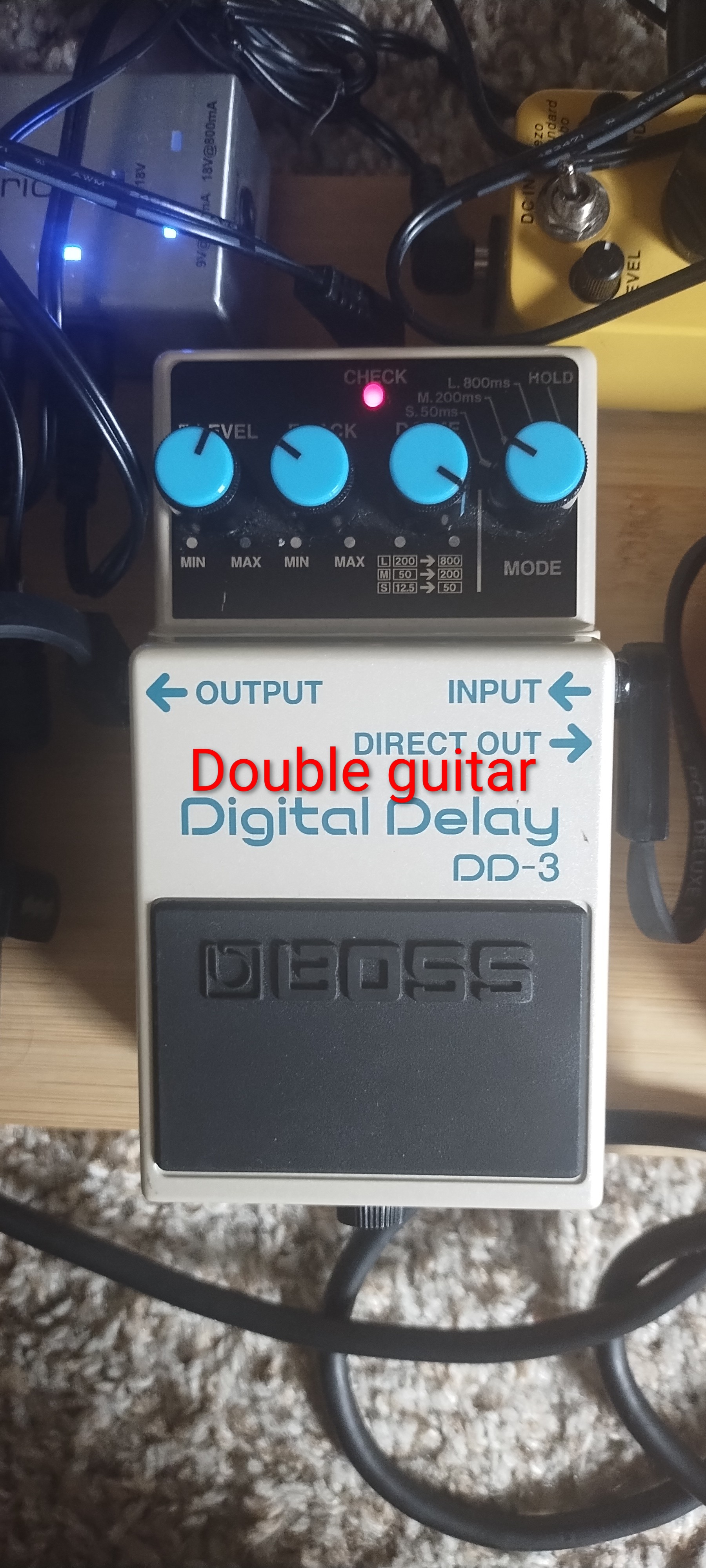
Doubled guitar sounds awesome on acoustic, especially in stereo. This setting does that in both mono and stereo, as well as thickening electric guitar. But you can also faux stereo-ize an entire mono rig by putting this at the end of your effects and splitting it between two amps. Get ready for a huge sound.
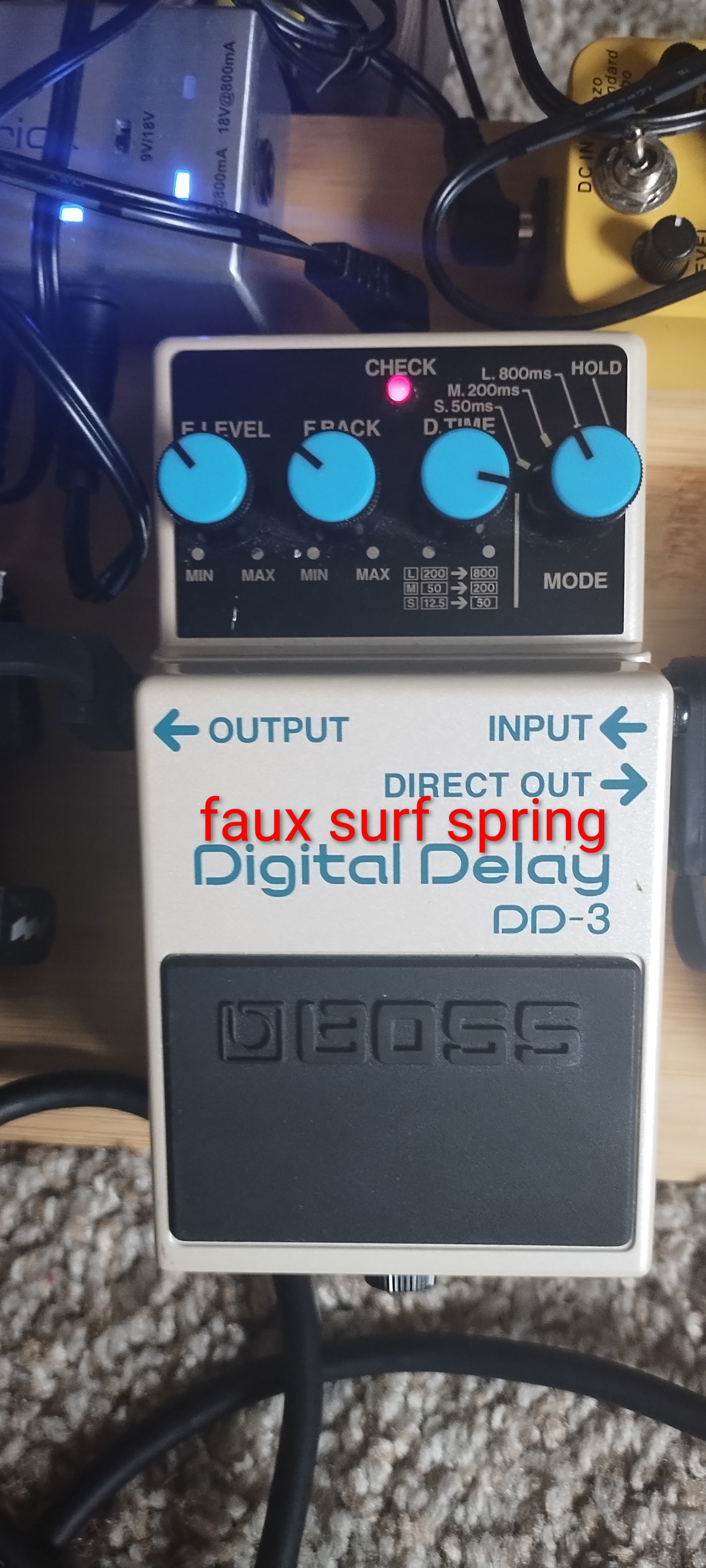
Will it work for surf? Most definitely. Hey anybody can get the right sound from the exact right equipment. This one forces you to be creative.
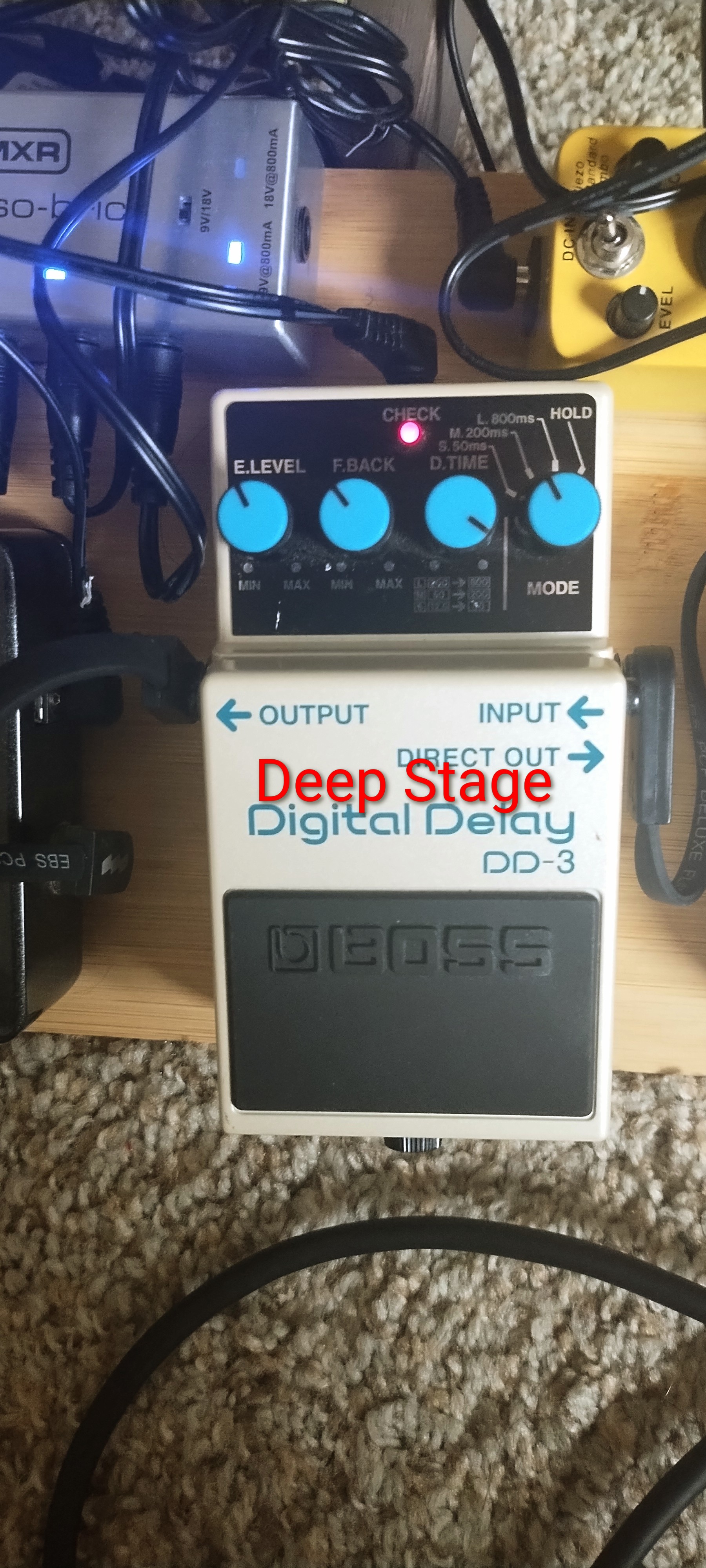
This one is for a lot of things, especially jazz chord melody. But it also works great on acoustic guitar.
There are many more settings which i haven’t shown, including:
slapback delay
harmonizing delay al la Queen’s Brian May
Faux bassline using the sample mode tuned up an octave then turned down
Short sequence played slightly up a key then tuned down to match the key and tempo you want.
Buy one and keep it. It should be in everyone’s guitar case.
And that’s that.
I have a friend who was originally into pedals but decided to go with a modeling amp. These amp are good and I recommend them if you want something all in one. But somewhere along the way, you’re going to get interested in pedals. Finding a good basic platform amp for those pedals is crucial.
I can get by with three pedals most gigs. I just need an overdrive, some form of ambience like delay or reverb, and a looper. But i can get by with one pedal if I have this kind of amp. It must have three things: a built in reverb, a dirty channel, and an aux in.
These types of (usually solid state amps) are good to have. You want to do a jazz brunch with some backing tracks? Cellphone or MP3 thru aux in and done. You want to work with just a looper? It provides the reverb. Need overdrive to rock with a band at rehearsal or live? You have it. Need to run your keyboard player thru the aux in? It works.
These amps are indispensable. They usually come in 15 watts and are labeled “15R” or something similar.
And that’s that.
Happy New Year all!
Amidst all the things going on in the world,music can be a sanctuary, whether its playing an instrument or listening. As an avid CD collector,I plan to rack up a lot of listening this year.
A lot of times, youtube watching and doom scrolling takes the place of good,intensive music listening, and that’s a shame, because youtube itself is a depository of a lot of great music that’s hard to find. We all,myself foremost, need to use this great resource for learning and listening,and skip the controversial rage feed. That stuff just isn’t healthy, no matter your political beliefs.
This is really a short, aimless note to all of you, but I guess my point is, lets try to get in some serious listening this year. Let’s get in some motown, jazz,funk,reggae, classical. Let’s not only be well read,but”well listened.”
Multitasking is a greatway to get in some music.We can run thru a short exercise routine while listening to rock, read a book while listening to Bach or Mozart (which has been proven to increase brain function), or memorize some Korean vocabulary by listening to K pop.
Time is a precious commodity so why not spend it on LOHAS ( life of health and sustainability)? Doom scrolling and rage content are not sustainable and do nothing for our life. Let’s focus on the music this year.
And that’s that.
Its a dream business for many of us. My own personal role model for this was the now gone pedal geek.com. Those who remember it well know that it was a haven on the net to browse some boutique pedals you’d never see on the big seller sites.
But to accomplish what pedalgeek did took a lot of work and positioning oneself getting to know suppliers. It’s not something you or I could do overnight.
That leaves most of us with trading pedals we’ve tried but don’t want or need to thin out to pay bills with. Those are our realities. No harm no foul.
There are three or four places to sell your pedals without too much trouble: reverb.com, eBay, mercari, and your local FB market. I find mercari to be the slowest way to sell. Generally, I sell on either reverb.com or local FB. My basic rule of thumb is: $50 and over, sell on reverb. $50 and under sell on local FB. I also prefer to sell anything bigger than a pedal on local market. This will save you a lot on shipping.
As far as pedal shipping cost, you really shouldn’t have to pay more than $7 to $12 to send an average Boss, MXR, EHX, or Keeley size pedal in the lower 48 states. It depends on how you pack it.
I only put bubble wrap on the front of the pedal. The back doesn’t need protection so much as the knobs on the front. Place this in either a bubble envelope from Dollar Tree or a flat rate bubble envelope from the post office and you will be shipping within the $7 to $12 range.
All in all, pedal flipping isn’t really a source of income for me. I meet people and try out some pedals I otherwise wouldn’t get a chance to. If I don’t make a profit off the sale ( bought for $100 sold for $90) I look at it as at least trying out a a$100 pedal for $10 bucks plus shipping.
And that’s that.

We all like to upgrade. We buy one thing, hear the next new thing, and try to buy it. Sometimes we sell off old stuff to get the new stuff. To each accordingly.
But there is wisdom, in fact, practical use, in hanging on to a few pieces of inexpensive equipment, especially if they did no wrong.
For one, they make a great place holder on your board until you find a replacement. But I also like to make an extra rig just to have.
The board in the picture is my mini board. It has everything I need to lay down a song idea or even gig. It’s just an IKEA bamboo cutting board with an overdrive, a multi effects, and a looper, as well as a pick dispenser. This goes into a padded pouch for gigging or onto my bookshelf for when I need it.
I find the effects to be adequate and sometimes even unique. The Ditto Looper can store my ideas until I can transfer them to a recorder or get me thru a looping gig no problem.
So don’t count out your old or cheap effects. They just may be your best pieces of equipment.
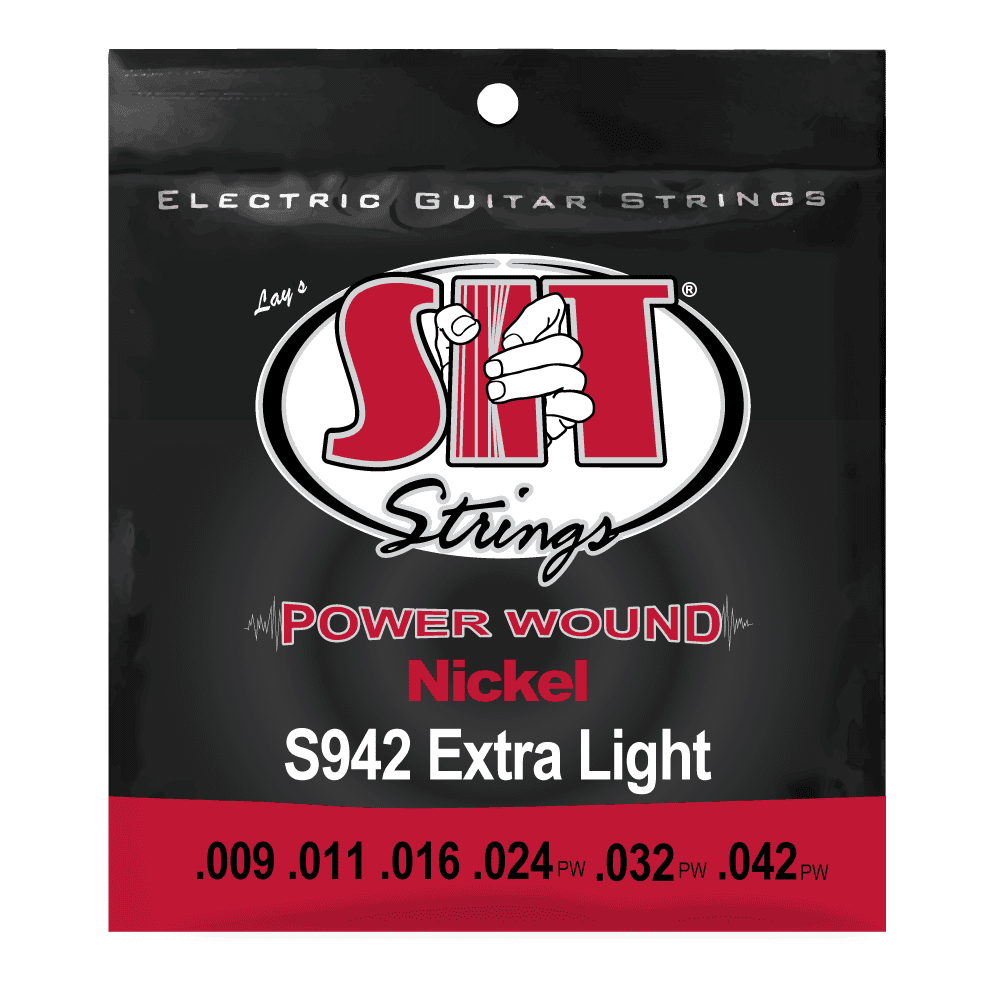 I am very pleased to be partnered with SIT (stay in tune) Strings as an artist endorser. I’ve been using them a long time, and I find they are the best for easy bends and smooth playing, as well as staying in tune like the name on the label says.
Also, they help balance the tremolo springs to strings tension better than any I’ve tried. If you’ve been having trouble floating your bridge, these are the answer.
SIT 9-42 have been my string for years. I hope you’ll give them a try.
With the advent of the home computer, many of us said that it would make musical ability irrelevant. Others said that the computer was just a tool, and new tools are always something cool that musicians will want to work with.
The latter camp proved to be mostly right. People still write songs on instruments as timeless as the guitar and the piano and use the computer to record, edit, and send out their works for their fans.
All good. The jury is still out in my mind about AI music, however. Its a sea change from what was before, some might say the end of what was before. I’m really not sure what to make of it.
A guitar maker who makes things by hand with archaic tools would not be blamed for using a modern skill saw and measuring tools from Home Depot. And though there may be some criticism of computer lathing, it is now an industry standard, and the results have really leveled the quality as to where guitars are made; namely, it doesn’t matter.
But with AI, it seems the tool is now the creator, with very little input from the human operator. That’s my take on it at this time.
I have ventured into using AI as a basic translator for lyrics. The results are a bit plain, but I am able to correct for that using my human knowledge of the language ( Japanese). But the lyrics are mine, not the product of an AI “write this” prompt.
So in a way, I’m “AI guilty”. But i have no plans to automate my music writing. If a usage for it comes up, I want to make sure that its only as a tool. In my opinion, it might be useful in the area of smart midi quantization and velocity editing. I always think the computer really shines as an editor, not a creator.
And that’s that.

