When I was in college, I was really blessed to be friends with a pianist from China named Chen Bi Nou. In case you don’t know who he is, there’s a film somewhere of President Nixon visiting China in 1973, and a young Bi Nou playing for him. He had been selected from all of China for this important event of East meets West.
Fast forward 15 years later, and east met west again, and I learned one of the most important things in music from it:
NEVER PRACTICE SCALES!
I had asked Bi Nou what exercises he did to play so smoothly, and he had this to say:
” Scale are useless. I practice songs and etudes. I just find a composition that has everything I need in it and practice that. If you just practice scales you can only do the scales, but if you practice compositions, you have all the practice you need, plus something to play for people.”
This statement went from my young ears to my big mouth, and soon everyone in the music department knew my newfound philosophy, and where I got it. This got Bi Nou a little bit of criticism from my piano teacher, but Bi Nou stuck by his philosophy. And I do too.
I’m not saying one should not learn scales. You have to know what the scales are and their fingering to be able to recognize and play them in a composition. So there is, as my other teachers fought so hard to defend, a need in the beginning to practice scales. But once the scales are learned, one must not stay there, but begin their practice in another context, that of etudes and compositions. No more time must be wasted on the solo practice of scales.
I’ve kept to Bi Nou’s philosophy for decades now. And I always thank him for teaching me.
Try it yourself, and streamline your practice and repertoire.
The Story Behind Tokyo Love
In 1991, I had an opportunity to go to Japan, my first time abroad. I had about 6 months to prepare the money to go. I was living in Houston’s Chinatown, barely getting by as a busboy. My income got so low that i was actually homeless for, thankfully, an hour. Nevertheless, songwriting was going good and was about to get better.
I left Chinatown for a brief time to move in with my brother near River Oaks district. This was the first time I had been exposed to what was (in the 90s) a very free and artistic area to live in. I had never lived in a soho, and i was really inspired by the many shops and bookstores.
But Chinatown never left me. Right down the street across Westheimer was Auntie Chang’s Dumpling House, still there to this day. I got a job as busboy all day until 5pm. My favorite thing at that age of 24 was to take my tip money, get on the Westheimer 85 and stop off at Miyako’s for sushi happy hour (and to see a waitress, which made it a very happy hour, of course). Then I would take my transfer, continue down Westheimer to the second run movie theater, dream about asking my waitress to the movie, catch Bill and Ted’s Bogus adventure, then take the 85 back home.
The other crazy thing was I was also in love with a girl at a karaoke near Beltway 8. I used to go sing for her every Friday. It turned out she knew my boss and passed her number thru him to me. WOW!
Somehow, I didn’t call her. But I went to the karaoke that night and asked her out. She said she was busy. This was actually the last night my brother and I could keep that apartment. He was moving in with friends and the landlord was renting it out. But i met a guy who invited me to be his room mate. He liked Japanese culture, so we attended the Houston Japanese Church together.
It was then I knew why I was there.
I became one of the pianists for the church. And i was asked by a pastor to visit Japan. That sparked me. I got a job and started saving for the trip. Then I borrowed a keyboard and wrote three songs, the surviving of which is Tokyo Love.
That song enveloped my hopes in japan. It’s innocent, maybe even a little corny by today’s standards, but I think it stands as a great song. 30 years later, one of my students loves it. I still do, too.
Randy Lin Live Recorded
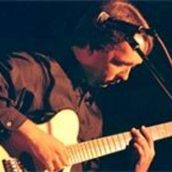
It was a good night. I managed to get thru all ten songs and commit them to recording. This was the first time they were all played at the same show. Now the editing!
“Randy Lin, All My Best” Live Concert in Works
The “Randy Lin, All My Best” Album will be recorded live sometime this year. This will be a solo set of my ten best songs, recorded live at a venue here in Taiwan. Time and venue to be announced.
Always more from Randy Lin!^^
Back From Hiatus
Randy Lin Guitar is back. I’ve switched from a pay site back to good ‘ol WordPress.
Happy to be home and will post more content soon. Please excuse the messiness while I get it in order. ^^
Thanks to all my readers and listeners.
Randy
The Story Behind Taipei Midnight Bossa
When I first moved to Taipei, I was being shuffled around to various A&Rs at the major recording labels. But still I had no contract. Feeling down, I left my agent’s office one day and went for some sushi, which always seems to give me a lift. I had only a week left before having to return to the States and money was running low.
As I left the sushi place, I turned left and saw a small English language school and went in for an interview. They arranged a teaching demo and I got the job the next day. With the day job taken care of, I went down Shin Seng South Road to a small jazz pub called Bluestown. I brought my guitar in and played some Fingerstyle jazz blues for the boss. He put me on the prime spot, Friday at 9:00pm.
After the show at Bluestown which paid 300NT (about $10 USD), a get you thru the weekend life-saver in those days, I was introduced to a producer. At that time I had a choice: write some sappy love songs for a singer at one of the big labels, or take a chance on something I really love–being a music studio cat. I ditched the diva opportunity and headed over to his studio.
I ended up sleeping in the studio on the floor, borrowing a motorcycle to get to my part-time English job and returning in time for music sessions. One of the cases we got was Hey Song Cola.
After the Hey Song case, my boss had an idea for an album of romantic jazz music that would be released in Kmart in America, sort of a bargain rack item. He asked me to get started on a piece or two.
I went home, grabbed an ovation classical, and played the harmonics you hear at the beginning of Taipei Midnight Bossa. In less than 30 minutes, the song was finished.
Before I could bring the song to the boss, the company broke up and the case was canceled. Luckily, I kept the song in my head. Since I did it in my own free time, I wasn’t going to give it to them anyway^^.
Is Taipei Midnight Bossa original ? Good question. There’s a little bit of Dan Fogelberg’s Guitar Etude #3, but I also borrowed a lot from techniques I developed in my twenties, especially the harmonics. There’s also some Wes Montgomery octaves in there.^^ The sheet music to Taipei Midnight Bossa will be available sometime soon for those who would like to learn the piece. I hope to play this for you all at the next show.
The Story Behind I Lan Road
I Lan Road (pronounced ee lahn) came to me on a train to I lan City, where I had a job teaching english once a week. This job paid pretty good, and included my train fare.
The I lan line runs along the ocean on the northeast coast of Taiwan. That day, the waves were “rolling in so rough”, literally. I looked out to my left and saw the “turtle mountain island”, aka Gwei San Dao. That sight really impressed me.
Also, the train was chugging along at a pretty good clip, which inspired the drum pattern you hear throughout the song. The line ” I can be your man if you want me to” has a double meaning; it could be romantic, directed at a woman, or spiritual, directed at God. It signifies the act of commitment after being awakened by such beauty.
I went home and worked out the rhythm on Hammerhead, a freeware drum program. The piano and bass are all on the Korg 01W synth, along with some extra cymbals and drum fills.
I recorded 3 guitars, as I remember. There is the basic strum, the backpedaling riff in the middle, and the solo, all done thru a Zoom 505 pedal. I did the vocals thru a live type mic, not a recording one. I never use a recording mic for vocals, for several reasons, one being that on that day, i didn’t have an exactly soundproof recording environment. Live mics tend to reject sounds farther back and to the sides (otherwise they’d pick up the whole band and would be useless).
Everything went in one pass. I didn’t “MIDI-fy” the synth tracks, except for the drum pattern. All the tracks went into audio live. The guitar solo I left as is, though it could be better. The feel was right, and sometimes,that’s the thing.
So there you have it: I lan Road. Enjoy.^^
Noriko At The Piano
I have been planning to release some important songs that I had written back from 1991 onward, and I felt this one really had to be first. I wrote it in about 30 minutes on a piano alone, one day before I left Japan for the US in spring of 1992.
The song is built around 4ths and 6ths in the right hand, something I got from listening to Bruce Hornsby back in the 80s. That sort of chording has stuck with me all these years, even now. The two hands start apart, then meet for a brief time at the same chord, then move on. In that respect, it might be a tone poem of sorts.
So the two hands meet briefly, then move on. There is a happier part on the F chord, which makes up the bridge, and it signifies the time of meeting. The harmony is very empty, but in that emptiness, one can sense a person. The angel voices I added to bring the whole thing up a plane, but the song plays just fine solo. I have played it live many times without the other parts.
When I got back to the States, I kept the song for the longest time. I didn’t feel it should ever be commercialized because it was so special to me. Then, I pitched it to a TV show, but it never got accepted. Finally, it made its way to Taiwan with me, where it got played in my shows and demos.
What’s the future of this song? I would hope that maybe it gets aired on a TV show or two. I think it fits certain types of scenes. I believe this song will find its place. It didn’t die all these years, and I think that’s testimony to the melodic strength of it.
Hope to have the sheet music out for all of you piano players soon.^^
Randy Lin Songs
Tokyo Love – 1991
Noriko at the Piano – 1992
Taipei Midnight Bossa – 1997
Take Me Back – 1998
I – lan Road – 2004
Give Me Back My Heart – 2004
Valhalla – 2008
Valleys – 2008
and many more coming, with sheet music!
Randy’s Ten Commandments of Recording
1. Fat in/ fat out, thin in/thin out – use a good preamp. There is no way to fix a weak signal later. All preamp, EQ, and compression is going in, not later.
2. Put each instrument you record in it’s own EQ range going in via high pass and low pass filter
3. compress what’s weak, limit what’s over, again, going in not later
4. record in mono, use stereo reverb later for width. An exception may be piano and drums, but not always.
5. record dry, reverb on monitor only. add reverb later
6. mix in mono, then pan to stereo, placing instruments according to an imaginary clock, ie bass at 11:00, acoustic guitar at 2:00, and so on.
7. use the same stereo reverb on all tracks via aux in, stereo out
8. Never use headphones for final reverb level. Do this on monitors or you will have too much reverb.
9. You need to know only three mics: A Shure SM58, a Shure SM57, and a Stereo Ribbon with mono/stereo switch. The SM58 is for vocals, the SM57 is for amps, horns, and acoustic guitars, and the ribbon is for drums (from front and over the set) and for piano ( lid open high).
10. Curtains, wooden floors, and nice throw rugs are the functional sound furniture of a good studio, and never sing thru headphones.
 randy lin guitar