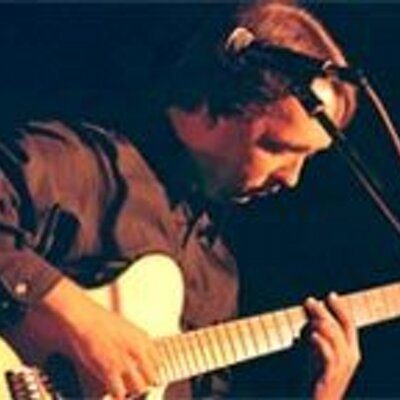
The “Randy Lin, All My Best” Album will be recorded live sometime this year. This will be a solo set of my ten best songs, recorded live at a venue here in Taiwan. Time and venue to be announced.
Always more from Randy Lin!^^
The “Randy Lin, All My Best” Album will be recorded live sometime this year. This will be a solo set of my ten best songs, recorded live at a venue here in Taiwan. Time and venue to be announced.
Always more from Randy Lin!^^
Randy Lin Guitar is back. I’ve switched from a pay site back to good ‘ol WordPress.
Happy to be home and will post more content soon. Please excuse the messiness while I get it in order. ^^
Thanks to all my readers and listeners.
Randy
When I first moved to Taipei, I was being shuffled around to various A&Rs at the major recording labels. But still I had no contract. Feeling down, I left my agent’s office one day and went for some sushi, which always seems to give me a lift. I had only a week left before having to return to the States and money was running low.
As I left the sushi place, I turned left and saw a small English language school and went in for an interview. They arranged a teaching demo and I got the job the next day. With the day job taken care of, I went down Shin Seng South Road to a small jazz pub called Bluestown. I brought my guitar in and played some Fingerstyle jazz blues for the boss. He put me on the prime spot, Friday at 9:00pm.
After the show at Bluestown which paid 300NT (about $10 USD), a get you thru the weekend life-saver in those days, I was introduced to a producer. At that time I had a choice: write some sappy love songs for a singer at one of the big labels, or take a chance on something I really love–being a music studio cat. I ditched the diva opportunity and headed over to his studio.
I ended up sleeping in the studio on the floor, borrowing a motorcycle to get to my part-time English job and returning in time for music sessions. One of the cases we got was Hey Song Cola.
After the Hey Song case, my boss had an idea for an album of romantic jazz music that would be released in Kmart in America, sort of a bargain rack item. He asked me to get started on a piece or two.
I went home, grabbed an ovation classical, and played the harmonics you hear at the beginning of Taipei Midnight Bossa. In less than 30 minutes, the song was finished.
Before I could bring the song to the boss, the company broke up and the case was canceled. Luckily, I kept the song in my head. Since I did it in my own free time, I wasn’t going to give it to them anyway^^.
Is Taipei Midnight Bossa original ? Good question. There’s a little bit of Dan Fogelberg’s Guitar Etude #3, but I also borrowed a lot from techniques I developed in my twenties, especially the harmonics. There’s also some Wes Montgomery octaves in there.^^ The sheet music to Taipei Midnight Bossa will be available sometime soon for those who would like to learn the piece. I hope to play this for you all at the next show.
1. Fat in/ fat out, thin in/thin out – use a good preamp. There is no way to fix a weak signal later. All preamp, EQ, and compression is going in, not later.
2. Put each instrument you record in it’s own EQ range going in via high pass and low pass filter
3. compress what’s weak, limit what’s over, again, going in not later
4. record in mono, use stereo reverb later for width. An exception may be piano and drums, but not always.
5. record dry, reverb on monitor only. add reverb later
6. mix in mono, then pan to stereo, placing instruments according to an imaginary clock, ie bass at 11:00, acoustic guitar at 2:00, and so on.
7. use the same stereo reverb on all tracks via aux in, stereo out
8. Never use headphones for final reverb level. Do this on monitors or you will have too much reverb.
9. You need to know only three mics: A Shure SM58, a Shure SM57, and a Stereo Ribbon with mono/stereo switch. The SM58 is for vocals, the SM57 is for amps, horns, and acoustic guitars, and the ribbon is for drums (from front and over the set) and for piano ( lid open high).
10. Curtains, wooden floors, and nice throw rugs are the functional sound furniture of a good studio, and never sing thru headphones.
just got the recoder and am familiarizing myself with it. big plans for this album. watch for it this spring!
randy

