Is Selling Guitar Pedals Profitable?

Its a dream business for many of us. My own personal role model for this was the now gone pedal geek.com. Those who remember it well know that it was a haven on the net to browse some boutique pedals you’d never see on the big seller sites.

But to accomplish what pedalgeek did took a lot of work and positioning oneself getting to know suppliers. It’s not something you or I could do overnight.

That leaves most of us with trading pedals we’ve tried but don’t want or need to thin out to pay bills with. Those are our realities. No harm no foul.

There are three or four places to sell your pedals without too much trouble: reverb.com, eBay, mercari, and your local FB market. I find mercari to be the slowest way to sell. Generally, I sell on either reverb.com or local FB. My basic rule of thumb is: $50 and over, sell on reverb. $50 and under sell on local FB. I also prefer to sell anything bigger than a pedal on local market. This will save you a lot on shipping.

As far as pedal shipping cost, you really shouldn’t have to pay more than $7 to $12 to send an average Boss, MXR, EHX, or Keeley size pedal in the lower 48 states. It depends on how you pack it.

I only put bubble wrap on the front of the pedal. The back doesn’t need protection so much as the knobs on the front. Place this in either a bubble envelope from Dollar Tree or a flat rate bubble envelope from the post office and you will be shipping within the $7 to $12 range.

All in all, pedal flipping isn’t really a source of income for me. I meet people and try out some pedals I otherwise wouldn’t get a chance to. If I don’t make a profit off the sale ( bought for $100 sold for $90) I look at it as at least trying out a a$100 pedal for $10 bucks plus shipping.

And that’s that.

Why You Should Keep Your Cheap Guitar Pedals

We all like to upgrade. We buy one thing, hear the next new thing, and try to buy it. Sometimes we sell off old stuff to get the new stuff. To each accordingly.

But there is wisdom, in fact, practical use, in hanging on to a few pieces of inexpensive equipment, especially if they did no wrong.

For one, they make a great place holder on your board until you find a replacement. But I also like to make an extra rig just to have.

The board in the picture is my mini board. It has everything I need to lay down a song idea or even gig. It’s just an IKEA bamboo cutting board with an overdrive, a multi effects, and a looper, as well as a pick dispenser. This goes into a padded pouch for gigging or onto my bookshelf for when I need it.

I find the effects to be adequate and sometimes even unique. The Ditto Looper can store my ideas until I can transfer them to a recorder or get me thru a looping gig no problem.

So don’t count out your old or cheap effects. They just may be your best pieces of equipment.

Choosing An Acoustic Guitar

I primarily play electric guitar, a Reverend Rocco USA that’s been with me for over 15 years. For acoustic parts, I like to use a Boss AC3 acoustic simulator or the one on my Roland amp. It gets me by, especially for those pub gigs where I cant bring a lot of stuff with me.
But for playing intricate, authentic acoustic guitar music, only a real acoustic guitar will do. There’s something about the envelope of the notes that sorry to say, a simulator hasn’t gotten down yet.
I think when choosing an acoustic , one should consider some key points; size, material, and of course price.
Size wise, I would not go any smaller than a 000, a 00 Martin size or a dreadnaught. I know there are lots of “parlor guitars” out there and I’m tempted by their easy of carry, but you just cant hold them in a comfortable position (at least I can’t). the only position I’ve found that works is not comfortable for doing vocals. With a dreadnought, a 000, or a 00, your arm can drape comfortably over the body, which translates to longer practice time and improved performance.
As far as materials go, I would choose a lesser name solid wood (sides, back, and top) over a well known laminate or composite any day. These laminate guitars sound ok and aren’t affected by weather,, but if you bust a hole in a laminate, you are probably looking at buying a new guitar.
Finally price. It really comes down to whether you can meet the above two requirements at a price you can afford. I would look at less prestigious brands to get what I need. Many of these brands will offer a solid mahogany for a reasonable price which should last you for a lifetime. And a solid wood guitar will only play and sound better with age.
And that’s that/

Now Endorsing SIT Strings

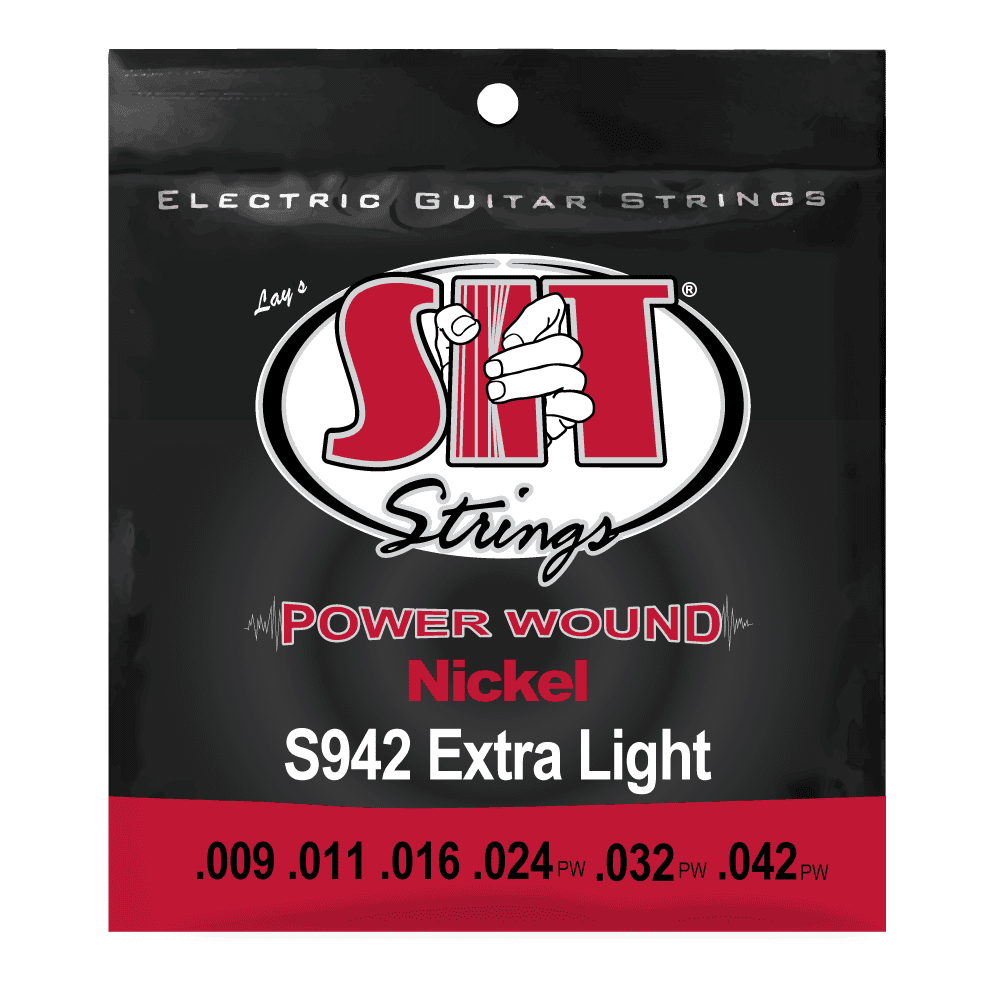
I am very pleased to be partnered with SIT (stay in tune) Strings as an artist endorser. I’ve been using them a long time, and I find they are the best for easy bends and smooth playing, as well as staying in tune like the name on the label says.
Also, they help balance the tremolo springs to strings tension better than any I’ve tried. If you’ve been having trouble floating your bridge, these are the answer.
SIT 9-42 have been my string for years. I hope you’ll give them a try.

AI and Musical Creation

With the advent of the home computer, many of us said that it would make musical ability irrelevant. Others said that the computer was just a tool, and new tools are always something cool that musicians will want to work with.
The latter camp proved to be mostly right. People still write songs on instruments as timeless as the guitar and the piano and use the computer to record, edit, and send out their works for their fans.
All good. The jury is still out in my mind about AI music, however. Its a sea change from what was before, some might say the end of what was before. I’m really not sure what to make of it.
A guitar maker who makes things by hand with archaic tools would not be blamed for using a modern skill saw and measuring tools from Home Depot. And though there may be some criticism of computer lathing, it is now an industry standard, and the results have really leveled the quality as to where guitars are made; namely, it doesn’t matter.
But with AI, it seems the tool is now the creator, with very little input from the human operator. That’s my take on it at this time.
I have ventured into using AI as a basic translator for lyrics. The results are a bit plain, but I am able to correct for that using my human knowledge of the language ( Japanese). But the lyrics are mine, not the product of an AI “write this” prompt.
So in a way, I’m “AI guilty”. But i have no plans to automate my music writing. If a usage for it comes up, I want to make sure that its only as a tool. In my opinion, it might be useful in the area of smart midi quantization and velocity editing. I always think the computer really shines as an editor, not a creator.
And that’s that.

Simplicity in Music Production

I get it. We all want super polished production that can stand a chance against other songs out there. But did you ever consider that with technology nowdays, anyone can do anything in a studio. Some of the vocalists may not even be human very soon.
The last true test of God given talent and human ability is the live stage. Just you and a guitar or piano, or perhaps an accompanist. Going for those notes in a real environment.
And it doesn’t take much to capture these moments. There are several recorders with 96kHZ recording. You just put one on a table in the audience and let it do it’s thing.
But it’s not perfect, you say. That’s the idea. One of my favorite albums has the buzz from the guitar amp and the resonance between the snare and bass drum. It’s so real, so smokey underground pub. And it will never be repeated in a studio.
Stick to the core elements of your songwriting. Any song that cannot stand alone with just a guitar and vocal is not a song, it’s a construction.
And that’s that.


How to Use Compression

While conscious dynamics are an important part of music, accidental ones such as uneven picking can make you sound less than stellar.

I have spent most of my life playing solid state amps, with the exception of a few great times where I played a nice Marshall or a Fender tube amp. In my experience,most solid state amps don’t accurately represent the envelope of the note you’re playing. There is this “runaway” feel, even on clean settings, that makes you lose confidence in your ability to control their playing, resulting in sometimes overly weak picking.

A good compressor can actually shape the envelope of sound. Every sound has what we call it’s envelope, or in synthesizer terminology, its ADSR ( attack decay sustain release).

Attack is how fast a sound comes in. Guitars, drums, anything percussive has a quick attack. Violins or woodwind instruments come in more slowly, so they have a slower attack.

Decay is how much time an instrument takes to go from it’s initial attack to the main body of the sound. Sustain is how life by the main body lasts, and release is how long the sound fades out.

One should use a compressor to mimic the ideal envelope or ADSR of the sound, but there are exceptions. Some styles of playing require a more flat (squashed) envelope to even out all the notes, while others demand an audibly obvious entry and exit of the compressor (pumping).

I personally like a very subtle compression that clamps down certain frequencies and levels and gives a smooth feeling to the song. For this I use a Boss CS3 compressor. It’s not really obvious, but if you A / B on and off the difference is there.

I run everything thru this compressor, even drum loops. It’s not expensive and it can really help to make your sound more complete.

I used to be against compressors, but they’ve added a lot of value to my pedal board.

And that’s that.

Having Your Own Creativity Corner aka Creation Station

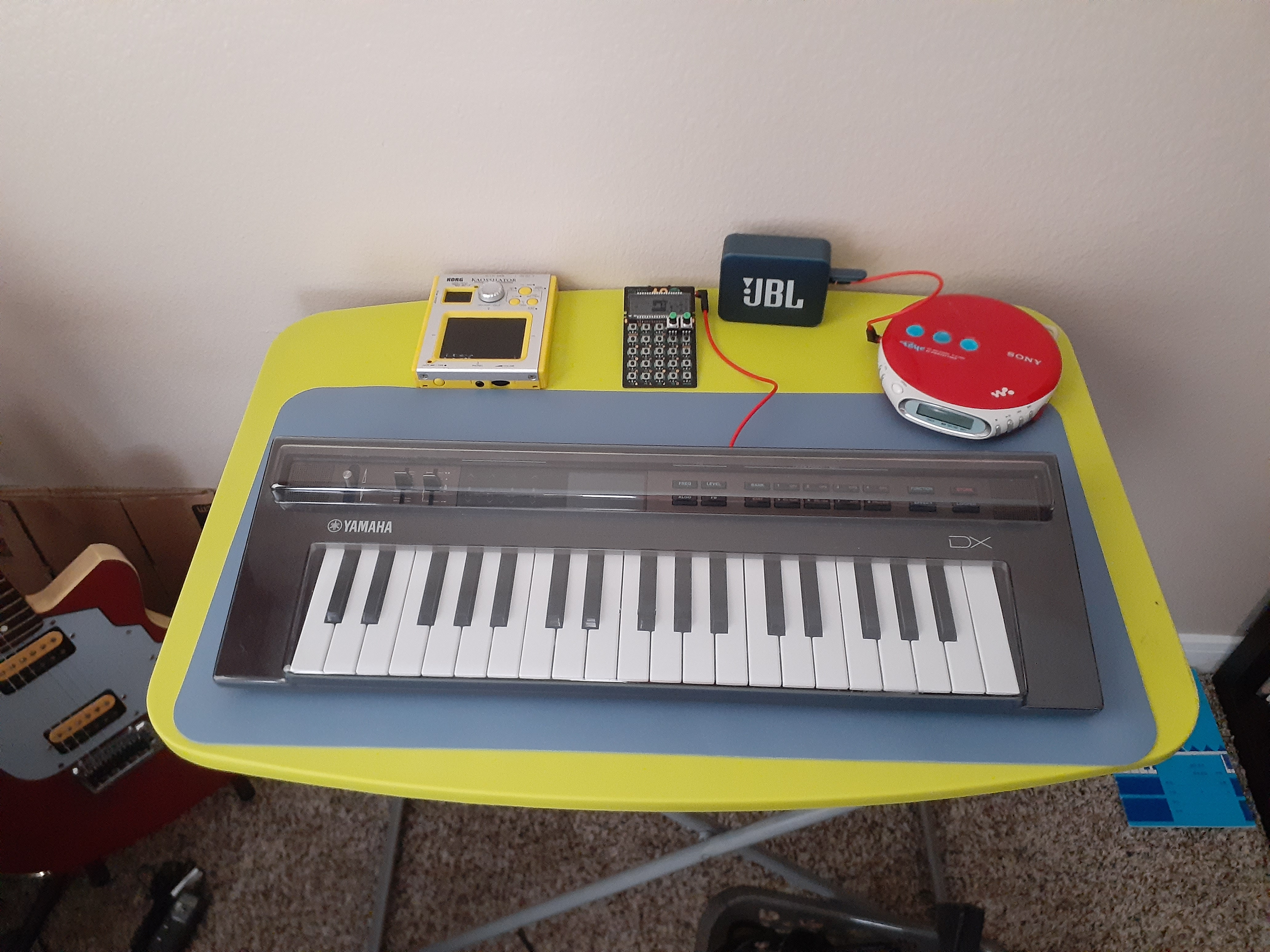
We just moved into our new apartment and while getting the kids room ready, I marked out my little music corner in the living room, right next to the balcony window, separated by a bookshelf next to the sofa. It’s a really cozy, inspiring workspace. I’m really minimalist for this worktable , just my DX Reface Synth and a couple of drum computers, recorded directly into my Zoom H1n. The table I found near the garbage bin, and the Amazon Basics computer pad makes for some radical contrast color. It’s a fresh palette to me.

So when will I record some new stuff? Hey, its summer and I’m melting. But once these kids get back to school, I’m getting some music done. I’ll post some then. See you.

Is Jazz Really That Difficult?

I find that Jazz has recently been the subject of much musical snobbery, especially since educational institutions have been trying to make it the new classical. You’d be surprised at the number of people who have asked me what school i studied jazz at or which jazz school is the best.

This has always puzzled me, because in my opinion, jazz is a folk art form. This seems strange to say considering that jazz has always been connected to the urban environment, but nevertheless, so are other art forms such as rap and def poetry.

To me, jazz is simply playing the melody and playing with melody. The techniques to do this are more from the ear than from the textbook, though textbooks can analyze and codify them. But then you have to ask yourself if you want your jazz to sound ” analyzed and codified”. Spare me.

Herein lies the problem with trying to make jazz the new classical. Yes there are jazz theories and approaches. At this stage in my life, I know them all. I can tell you that none of them beat time spent on the fretboard, learning the melody then bending it in various ways that are discovered spontaneously and organically, then honed through conscious practice until they become second nature.

One can only do this if he or she spends a lot of time listening to jazz until something sticks that you really want to play. Finding good jazz to listen to is key.

I for one love smooth jazz. I don’t apologize for it no matter what the jazz snobs think of me. Smooth jazz is the best way to get into jazz playing. Then move up to cool jazz with Miles Davis. Then go on to Wes Montgomery and John Coltrane.

Take it step by step, listening to what these masters are doing with the melody. Be able to sing what they’re doing before you try to play it. This will make everything you do spontaneous.

Get to work.

What’s my backline? And is equipment THAT important?

Living(until recently) in very crowded Taiwan for over 20 years, I have become somewhat of a “compact” person. No i don’t mean I got squished on the subway (though that has happened). I mean traveling light but having the most important things for a gig. Certain items have become indispensable for me and I’ve always come back to them for my gig carry. Your mileage may vary:

Guitar- this is really a personal preference. Mine is a Reverend Rocco USA with humbuckers and tremolo. I can get most sounds I want with it, and if I set it up just before the show, it plays great all night.

Amp- I have to say. the Roland Micro Cube GX is still the most practical amp around. I sometimes like to do acoustic stuff, so the acoustic simulator in it is great for me. Reverbs and delays are good as well as the chorus and overdrive.

Effects- really i only need a looper going direct into the microcube on a jazz setting. Most of my playing is solo style with chords, bass, and melody together because I come from an acoustic guitar background, which included Travis picking, jazz chord melody, and blues fingerpicking. But for some things, I like to single line solo using a looper. Lately I’ve been using a TC Ditto, but I’m thinking of getting a Boss RC1.

Keyboard- yes I play some keyboard with vocals in my shows. I just bought a Yamaha DX Reface for that. The mini keys are a little bit nerve racking, but I’m getting used to them.

Mic- I have a Mackie Element vocal Mic. It’ll do.
Cases and transport- everything has its own padded gigbag and is pushed on a dolly. I’m not doing any more heavy lifting at my age.

I might get a Behringer Compact PA for street festivals.
Hope to do that and see you all soon.